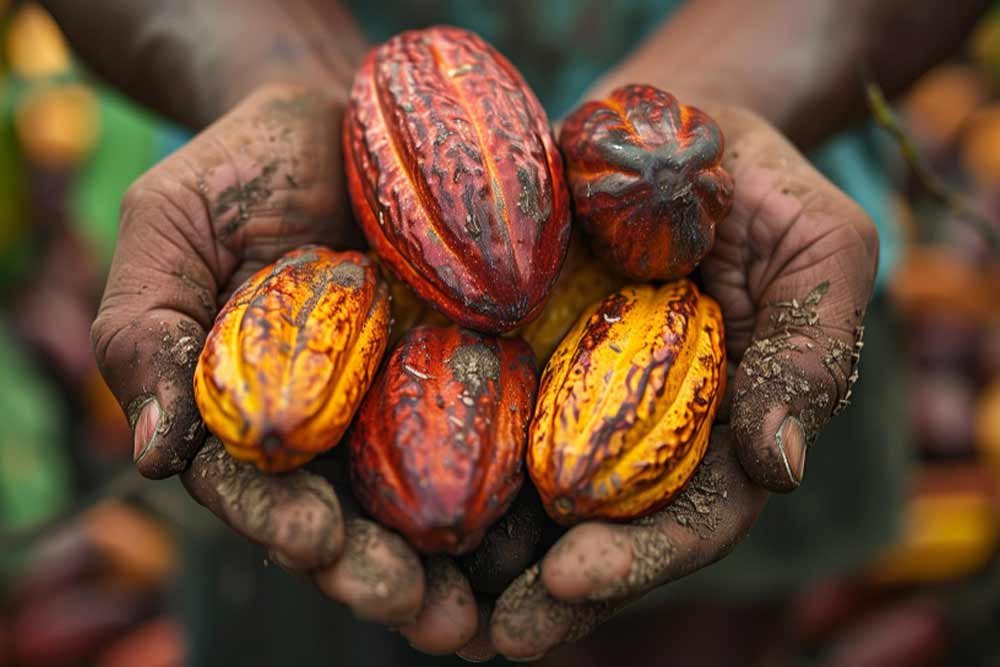
Cameroon is one of Africa’s well-known cocoa-producing countries, with cocoa farming playing an important role in the livelihoods of farming communities across the country. Grown in Cameroon’s tropical climate, cocoa beans are valued for their distinctive flavor and are used to create chocolate, cocoa powder, cocoa butter, and many other products.
The Rich Cocoa-Growing Regions of Cameroon
Cameroon’s warm temperatures, regular rainfall, and fertile soils create favorable conditions for cocoa cultivation. Cocoa is grown primarily by smallholder farmers, with production concentrated in several regions of the country.
The Centre, South, East, and Littoral regions are among the important cocoa-growing areas. Farmers carefully cultivate cocoa trees and harvest the ripe pods by hand when they reach maturity.
From Cocoa Pod to Cocoa Bean
The journey of cocoa begins with the harvesting of mature cocoa pods. Farmers open the pods to remove the cocoa beans surrounded by a sweet, white pulp.
The beans then go through several important steps:
Harvesting: Mature cocoa pods are carefully picked from the trees.
Fermentation: Fresh cocoa beans are fermented for several days, helping develop their characteristic flavor.
Drying: The fermented beans are dried, traditionally under the sun, to reduce moisture.
Sorting and grading: Beans are inspected and prepared according to quality standards.
Processing: Cocoa beans can be transformed into cocoa liquor, cocoa butter, cocoa powder, and chocolate.
Each stage influences the final quality, aroma, and flavor of the cocoa.
What Makes Cocoa from Cameroon Special?
Cameroonian cocoa is appreciated for its natural characteristics and the diversity of flavors that can develop during fermentation and processing. Depending on the growing region and post-harvest practices, cocoa can offer a balanced combination of chocolate, earthy, fruity, and nutty notes.
The quality of cocoa is influenced by many factors, including the variety of cocoa tree, soil, climate, harvesting practices, fermentation, drying, and storage conditions.
Supporting Cocoa-Farming Communities
Cocoa production is more than an agricultural activity—it is an important source of income for many families and communities in Cameroon.
Responsible sourcing and strong relationships with farmers can help encourage better agricultural practices, improve post-harvest handling, and support long-term sustainability in cocoa-growing communities.
From Cameroon to Global Cocoa Markets
After harvesting and processing, cocoa from Cameroon can become part of the global supply chain, eventually reaching chocolate manufacturers and food producers around the world.
Behind every cocoa bean is a journey that connects farmers, processors, traders, manufacturers, and consumers. Understanding this journey helps us appreciate not only the flavor of cocoa but also the people and communities involved in producing it.
The Future of Cocoa in Cameroon
The future of Cameroon’s cocoa industry depends on continued investment in sustainable farming, farmer education, quality improvement, and responsible supply chains.
By focusing on better cultivation and post-harvest practices, Cameroon can continue strengthening the quality and reputation of its cocoa while creating greater opportunities for farming communities.
Final Thoughts
Cocoa from Cameroon represents a combination of rich agricultural heritage, tropical growing conditions, skilled farming communities, and a growing connection to global cocoa markets.
From a carefully harvested cocoa pod in Cameroon to the chocolate products enjoyed around the world, every bean carries a story of farming, craftsmanship, and connection.