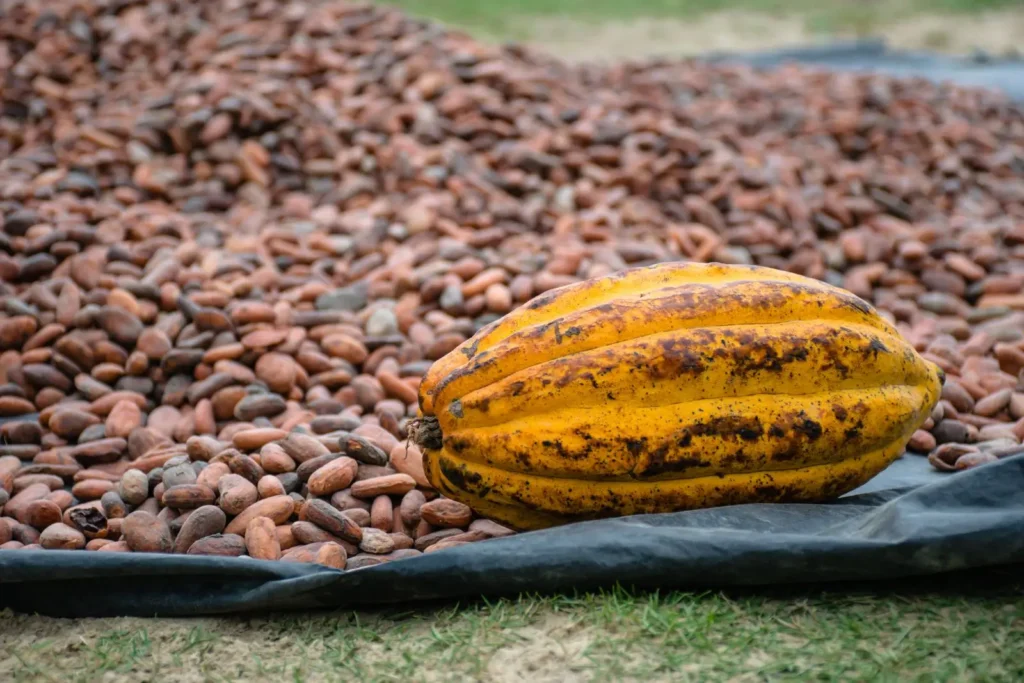
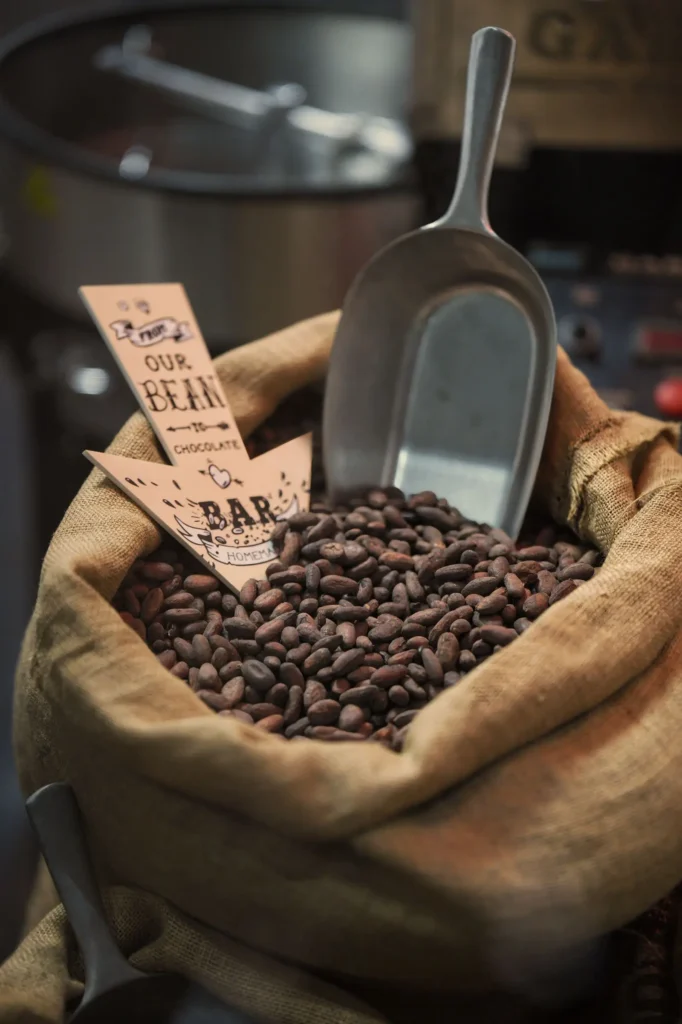
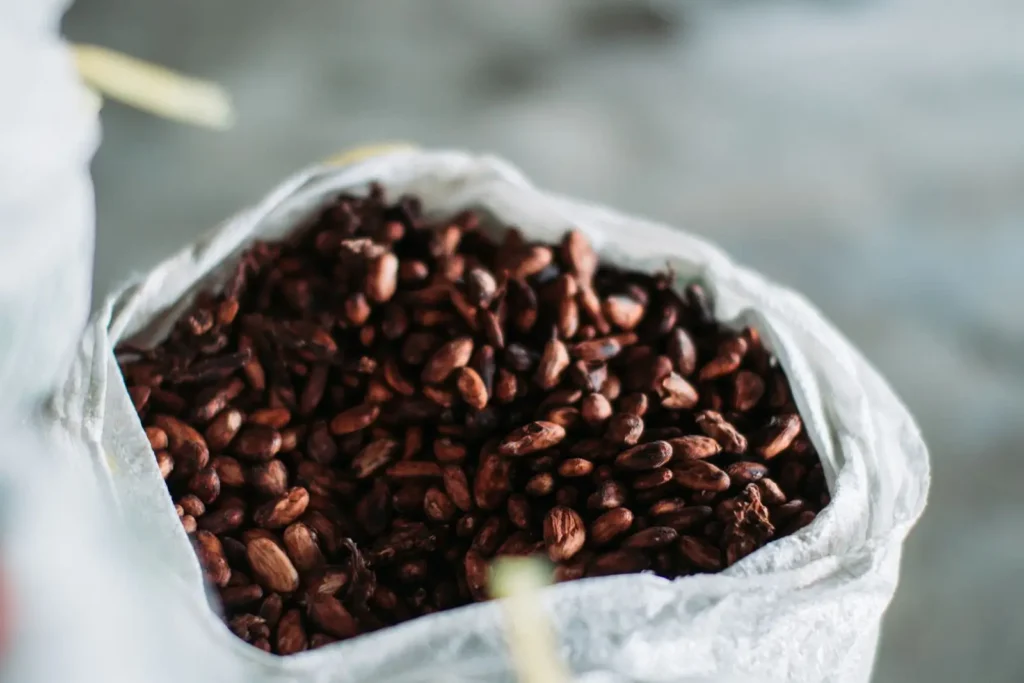
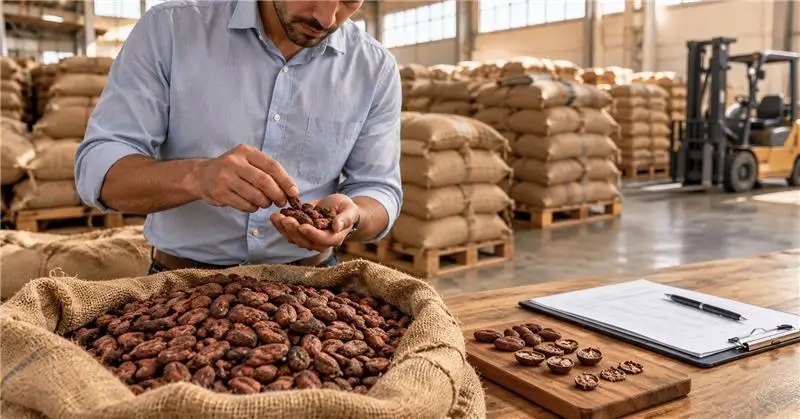
If you import cocoa beans into the United States, your supplier decides how smooth the rest of the job is. Makay Global Trading sells fermented Cameroon cocoa beans to U.S. importers under a written contract, with specifications and shipping terms settled before anything is loaded.
You handle the import. We handle origin, preparation and the paperwork that has to leave Douala with the cargo.
What a USA Cocoa Beans Importer Needs From a Supplier
A USA cocoa beans importer needs four things from a supplier: a written contract, agreed limits for moisture, fermentation and defects, a clear Incoterm, and export documents that match what U.S. Customs, the FDA and the USDA check at the port of entry.
The United States grows almost no cocoa. Outside a small crop in Hawaii, every bean that reaches an American factory has been imported by someone. USDA figures put U.S. imports of raw cocoa beans at more than $1.1 billion a year across 2017 to 2021, most of it from Côte d’Ivoire, Ecuador and Ghana.
Cameroon gives importers another African origin to work with. The country marketed about 248,000 metric tons of cocoa in the 2025/26 season, according to its National Cocoa and Coffee Board. You can read how we source it on our supply model and responsible sourcing pages.
Three agencies touch a cocoa shipment: Customs and Border Protection, the FDA and the USDA. This table lists what each one asks for and who normally takes care of it.
Requirements for importing cocoa beans into the USA
Requirement
What it means
Who handles it
Tariff code and duty
HTS 1801.00.00, general rate free. Any additional duties in force are added on top
Customs broker
Importer Security Filing
ISF (10+2) filed at least 24 hours before loading at the foreign port
Importer or broker
FDA Prior Notice
Filed and confirmed before arrival. For ocean cargo, at least 8 hours ahead
Importer or broker
FDA facility registration
Foreign facilities that process, pack or hold the beans for U.S. consumption must be registered
Supplier side
FSVP
An FSVP importer is named on every food entry. How much verification is needed depends on who controls the hazards
Importer
Customs entry and bond
Formal entry for commercial cargo, backed by a single-entry or continuous bond
Broker, on the importer’s bond
USDA APHIS
Check current entry conditions for Cameroonian cocoa in the ACIR database. Cargo can be inspected on arrival
Importer
Wood packaging
Pallets and dunnage must be ISPM-15 treated and marked
Supplier and shipper
Shipping documents
Commercial invoice, packing list, bill of lading and the certificates agreed in the contract
The order matters. Two of these filings have deadlines that fall before the vessel even leaves Douala, so line up your broker first.
Appoint a licensed customs broker and set up a bond.
Your broker files the entry, and a continuous bond makes sense if you plan more than a shipment or two a year.
Agree specifications and the Incoterm in a written contract.
Put numbers on moisture, fermentation and defects, and name the port and the inspection method.
Confirm who the FSVP importer is.
The FDA expects a U.S. party to be identified on each entry, with records to back it up.
File the ISF 24 hours before loading.
Late or inaccurate filings can bring penalties and holds, so send your broker the booking details early.
Submit FDA Prior Notice before the vessel arrives.
It is usually filed with the customs entry through the same system.
Clear the entry.
Your broker classifies the beans under HTS 1801.00.00 and pays any duties and fees due. CBP agriculture specialists or the FDA may examine the cargo.
Move, weigh and sample the cargo.
Arrange drayage to your warehouse, then check weights and quality against the contract while claim deadlines are still open.
Quality Checks Before You Import Cocoa Beans
Price gets the attention, but these four checks decide whether a lot clears the port and runs well in the plant.
Moisture
Wet beans mold in transit. Our standard is approximately 8%. Agree a maximum in the contract and ask for the test result, not just the stated figure.
Fermentation
A cut test shows what's inside the bean. We work to a minimum of 75% fermented, and the count for slaty and defective beans belongs in the contract too.
FDA Defect Levels
The FDA can act when more than 4% of beans are moldy, more than 4% are insect-infested or damaged, or more than 6% combined. Set your own limits below that.
Packing & Transit
Cocoa sweats at sea. Ask how the container is lined and whether desiccants are used, and make sure any pallets or dunnage meet ISPM-15.
Defect figures are from the FDA Food Defect Levels Handbook. See how Makay handles quality assurance and the full spec table on our bulk cocoa beans page.
Some of our buyers import to resell. Others import because their own plant needs the beans. Either way, the conversation starts with what you do with the cocoa once it lands.
Is Makay Global Trading a USA cocoa beans importer?
Makay is a U.S.-based commodity trading company and the contractual seller of the cocoa. We supply U.S. importers. On FOB Douala, CFR and CIF sales, the buyer acts as importer of record and clears the cargo through U.S. Customs.
What do I need to import cocoa beans into the USA?
You need a licensed customs broker, a customs bond, an Importer Security Filing lodged 24 hours before loading, FDA Prior Notice, an FSVP importer named on the entry, and shipping documents that match the cargo. Check USDA APHIS entry conditions and ISPM-15 rules for wood packaging as well.
What is the HTS code and import duty for cocoa beans?
Raw cocoa beans are classified under HTS 1801.00.00, and the general duty rate is free. Additional trade duties have changed several times since 2025, so confirm the rate in force with your customs broker before you price a contract.
What quality limits does the FDA apply to imported cocoa beans?
The FDA’s defect action levels for cocoa beans are more than 4% of beans moldy by count, more than 4% insect-infested or insect-damaged, or more than 6% for the two combined. Lots above these levels can be refused entry, so set your contract limits tighter.
Which shipping terms can a U.S. importer buy on?
U.S. importers can buy on FOB Douala terms and arrange their own ocean freight and insurance. CFR and CIF quotations to a named U.S. port are available on request. Under all three terms, U.S. customs clearance stays with the importer.
Which U.S. ports handle cocoa beans?
Most cocoa enters through the East Coast. Exchange-licensed cocoa warehouses sit in the port districts of New York, the Delaware River (the Philadelphia and Camden area), Hampton Roads, Albany and Baltimore. Tell us your preferred port and we’ll quote to it where CFR or CIF is available.
When is Cameroon's cocoa season?
Cameroon’s cocoa season opens in August and runs to mid-July of the following year. Availability and quality vary across the season, so share your purchasing calendar early and we can match your shipment window to supply at origin.
Which documents come with a shipment?
Depending on destination and contract, records may include a commercial invoice, packing list, bill of lading, certificate of origin, phytosanitary certificate, and weight or quality reports. We settle the required list with you before booking.
Can I test a sample before importing a full container?
Yes, ask us about sample availability and dispatch costs. Tell us which tests you plan to run, because your results can help set the acceptance criteria for the purchase that follows.
What is the minimum order for a cocoa beans importer?
We sell in container quantities, and the minimum depends on the lot and shipment arrangement. Put your tonnage in the inquiry and we’ll tell you whether it can be accommodated.
Tell us your quantity, destination port, specifications and delivery schedule. Our team will review your requirements and send available supply options.